
AR try on ecommerce adoption: revolutionizing online shopping
Anúncios
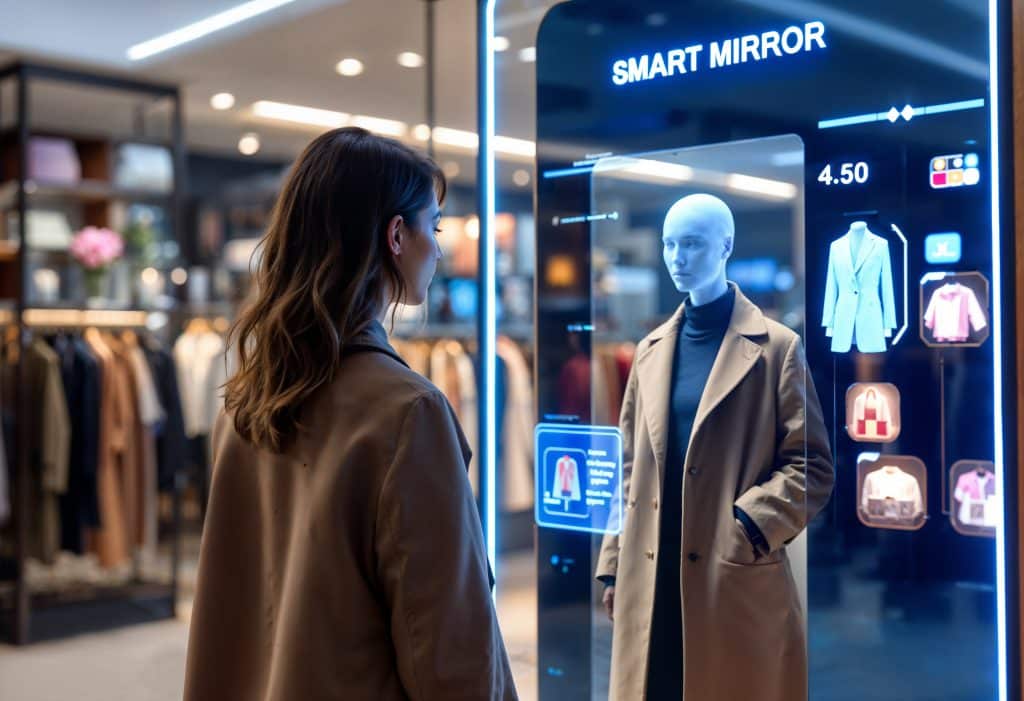
AR try on ecommerce adoption is changing how consumers interact with products online by allowing them to visualise clothing, accessories, makeup, furniture, and other items before purchasing.
Augmented reality creates a more interactive shopping experience by placing digital products into real-world environments through smartphones and other compatible devices.
Anúncios
For retailers, this technology can support engagement, product discovery, personalisation, and more confident purchasing decisions while introducing new technical and operational challenges.
What is AR try on technology?
AR try on technology uses augmented reality to allow shoppers to preview products virtually. Instead of relying only on static photographs, customers can interact with products in a more visual way.
Anúncios
The experience can be applied to fashion, beauty, accessories, footwear, furniture, and other ecommerce categories. A device camera helps connect digital products with the user’s surroundings.
This capability is an important part of AR try on ecommerce adoption because it reduces some of the uncertainty associated with buying products without seeing them physically.
How AR Try On Works
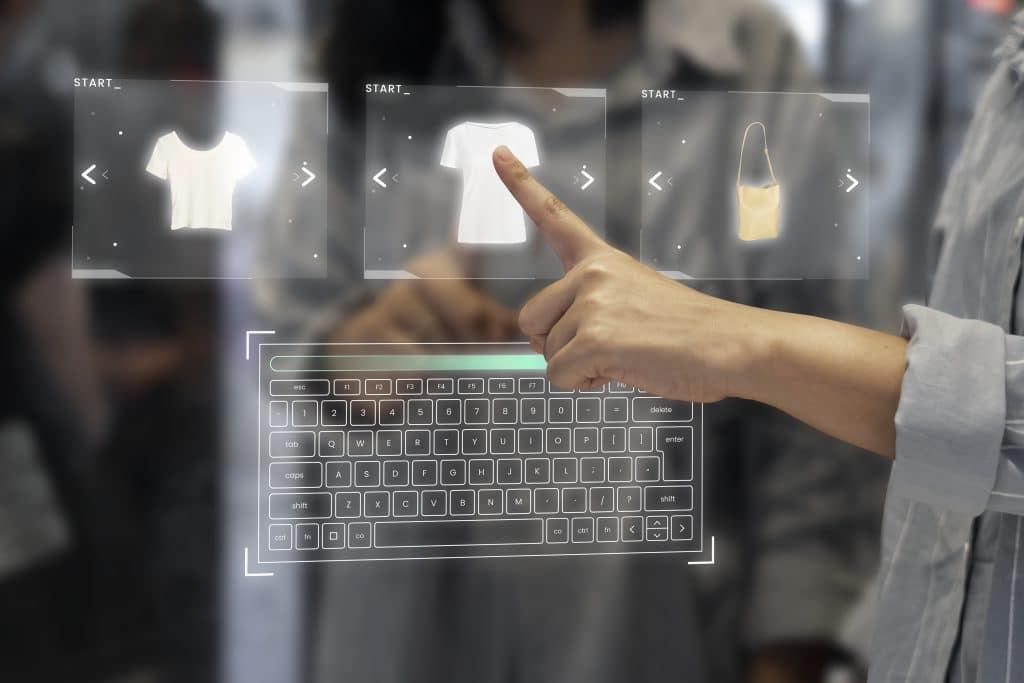
AR try on technology overlays digital objects onto a live camera image. The software identifies relevant surfaces, body areas, or facial features and positions the virtual product accordingly.
Customers can then see how an item might look without visiting a physical store. The experience updates in real time as the user moves or changes viewing angles.
This interactive process helps explain why AR try on ecommerce adoption continues attracting retailers seeking to make digital shopping feel more tangible.
Key Features of AR Try On
AR platforms combine visualisation, personalisation, and interaction to create a richer product experience. The exact features depend on the retailer and product category.
- Real-time visualization of products
- Personalized fitting options
- Enhanced customer engagement
Real-time previews can help customers understand colour, style, placement, and overall appearance. Personalised fitting options may provide another layer of confidence during selection.
These features can make AR try on ecommerce adoption valuable for brands competing for attention. Interactive tools create an experience that differs from conventional product pages.
Benefits of AR Try On Technology
Virtual try-on can make customers feel more involved during the purchase journey. A clearer understanding of a product may increase confidence before checkout.
- Increased consumer satisfaction
- Higher conversion rates
- Greater brand loyalty
Retailers may also reduce some avoidable returns when shoppers gain a better visual impression before buying. Results still depend on the accuracy of the AR experience and product.
As AR try on ecommerce adoption expands, brands can use these experiences to differentiate themselves while creating a more engaging digital shopping environment.
Benefits of AR in ecommerce
Augmented reality can make online shopping more interactive by giving consumers additional ways to examine products. This can reduce the gap between physical and digital retail.
Consumers can preview items in their own environment or see how certain products appear on them. The result is a shopping journey with greater visual context.
For retailers, AR try on ecommerce adoption can support customer satisfaction, engagement, conversion, and data collection when implemented effectively.
Enhanced Customer Experience
AR gives customers an opportunity to interact with products before purchasing. Furniture can be viewed inside a room, while clothing or cosmetics may be previewed virtually.
This interaction can make product discovery more enjoyable than browsing static images alone. It also allows customers to evaluate options within a more personal context.
A stronger experience can support AR try on ecommerce adoption by giving shoppers a practical reason to use the technology instead of treating it as a novelty.
Increased Conversion Rates
Customers may feel more confident when they can preview a product before checkout. Greater confidence can reduce hesitation during the purchasing process.
- Customers feel more satisfied with their decisions.
- Reduces the likelihood of returns.
- Encourages impulse buying through interactive features.
Interactive product experiences may also encourage users to explore more items. This creates additional opportunities for retailers to present complementary products or alternatives.
The commercial value of AR try on ecommerce adoption depends on whether these interactions translate into stronger purchasing decisions and customer satisfaction.
Customer Insights and Brand Loyalty
AR interactions can generate useful information about which products, colours, styles, or features attract consumer attention. Retailers can use these insights to understand preferences.
- Improves customer engagement metrics.
- Facilitates personalized marketing opportunities.
- Provides insights into customer preferences.
Unique digital experiences may also encourage customers to return to brands that provide useful tools. Convenience and innovation can contribute to stronger loyalty.
When used responsibly, data generated through AR try on ecommerce adoption can support more relevant marketing and product-development decisions.
How AR impacts customer engagement
Augmented reality changes customer engagement by making product interaction more active. Shoppers are no longer limited to observing photos, descriptions, or videos.
Virtual product interaction can make the shopping experience more memorable and encourage users to spend additional time exploring products.
This deeper interaction is one reason AR try on ecommerce adoption has become relevant for brands seeking stronger connections with online audiences.
Interactive Experiences
AR allows users to place products into real-world contexts in real time. Customers can virtually try clothing or assess how furniture may look inside their homes.
This direct interaction helps shoppers imagine products as part of their everyday lives. The experience can therefore feel more personal than conventional ecommerce browsing.
Interactive features strengthen AR try on ecommerce adoption by creating memorable moments that may encourage repeat visits and continued product exploration.
Personalization and Customization
Personalisation allows customers to experiment with different colours, sizes, styles, and product variations. This can make shopping feel more relevant to individual preferences.
- Enhanced interactions lead to greater trust.
- Customers enjoy tailored shopping experiences.
- Increases the chance of word-of-mouth referrals.
Customisation can also create a stronger sense of involvement in the decision. Users participate actively rather than simply selecting from a static catalogue.
This personal connection can improve AR try on ecommerce adoption because customers receive an experience adapted more closely to their needs.
Data-Driven Engagement
AR experiences can reveal how customers interact with different products and features. Retailers can observe which options attract attention or generate more engagement.
- Provides insights into customer preferences.
- Enables brands to improve their marketing efforts.
- Supports better customer service approaches.
These insights can be used to refine marketing messages and product recommendations. Better information can help retailers create more relevant future experiences.
Data therefore becomes another component of AR try on ecommerce adoption, provided businesses maintain appropriate privacy and security practices.
Challenges of adopting AR in online stores
Despite its potential, implementing AR can require substantial planning and resources. Businesses need technology that performs reliably across different devices and operating environments.
Development costs, maintenance requirements, employee training, and customer adoption can all affect the success of an AR project.
Understanding these limitations is essential before expanding AR try on ecommerce adoption. Retailers should evaluate whether the technology addresses a genuine customer need.
Technical Limitations
AR requires software capable of processing camera images, tracking objects, and displaying digital content accurately. Performance may vary according to the user’s device.
Retailers also need to ensure that AR tools integrate smoothly with ecommerce platforms, product catalogues, and mobile applications.
Technical reliability is central to AR try on ecommerce adoption. A slow or inaccurate experience can frustrate customers instead of improving their journey.
Cost of Implementation
Developing AR experiences can require investment in software, 3D assets, device compatibility, and platform integration. These costs may be challenging for smaller retailers.
- Investment in AR technology can be high.
- Training staff on new systems is essential.
- Regular updates and maintenance are necessary.
Costs can continue after launch because technology, devices, and operating systems evolve. Businesses may need ongoing technical support and updates.
A sustainable AR try on ecommerce adoption strategy should therefore compare implementation costs with expected customer and commercial benefits.
Data Privacy and Security
Some AR applications process camera images, user preferences, behavioural information, or other personal data. Retailers need clear policies explaining how this information is handled.
- Compliance with data protection laws is critical.
- Customer trust can be jeopardized if data is mishandled.
- Transparent policies are essential for user confidence.
Security safeguards are also important because customers may hesitate to use features that request camera access or personal information without adequate explanation.
Trust is therefore essential to AR try on ecommerce adoption. Retailers must balance personalisation with privacy, transparency, and responsible data practices.
Case studies of successful AR implementations
Existing retail implementations show how augmented reality can be adapted to different product categories. Furniture, cosmetics, footwear, and fashion all offer distinct use cases.
These examples demonstrate that AR works best when it solves a practical shopping problem. Visualising size, appearance, colour, or placement can provide immediate value.
Successful projects also provide useful lessons for future AR try on ecommerce adoption. Technology should support the purchase journey rather than distract from it.
IKEA Place
IKEA Place allows users to visualise furniture inside their own spaces through augmented reality. Customers can position digital products inside a room before purchasing.
This approach helps shoppers better understand scale, placement, and visual compatibility. Furniture becomes easier to evaluate without relying entirely on measurements and photographs.
The example demonstrates how AR try on ecommerce adoption can extend beyond wearable products. Spatial visualisation can also reduce uncertainty in home-related purchases.
Sephora Virtual Artist
Sephora’s Virtual Artist uses augmented reality to let shoppers experiment with cosmetic products. Users can preview lipstick, eyeshadow, and other looks digitally.
- Boosts customer engagement through interactive try-ons.
- Increases product exploration, resulting in more purchases.
- Creates a fun and memorable shopping experience.
Virtual makeup can encourage consumers to test shades they may not otherwise consider. This expands product discovery without requiring physical samples.
The experience illustrates how AR try on ecommerce adoption can combine experimentation with convenience in the beauty industry.
Adidas and L’Oreal AR Experiences
Adidas has used augmented reality to let customers preview footwear virtually. Users can see how different styles appear on their feet through compatible devices.
- Enables customers to experiment with various products.
- Encourages brand loyalty through innovative shopping solutions.
- Enhances the overall beauty and fashion shopping journey.
L’Oreal has also integrated AR features into digital beauty experiences, allowing customers to explore different cosmetic looks before purchasing.
These examples reinforce the flexibility of AR try on ecommerce adoption. Similar technology can be adapted to multiple products when the visualisation offers genuine value.
Future trends in AR ecommerce adoption
The future of AR try on ecommerce adoption is closely connected to improvements in artificial intelligence, personalisation, mobile hardware, and social commerce.
As the technology becomes more accurate, consumers may receive increasingly realistic previews and recommendations based on individual preferences.
Retailers will also explore more immersive shopping environments. The distinction between browsing, entertainment, social interaction, and purchasing may continue to narrow.
Personalization and Customization
Future AR systems may use customer preferences and behavioural data to create more individualised product suggestions. Virtual try-on could automatically prioritise styles relevant to each user.
Personalisation may also improve fit, colour selection, and recommendations. These improvements could make digital shopping feel closer to personalised assistance in physical retail.
This evolution may accelerate AR try on ecommerce adoption because users receive greater practical value from each interaction.
Integration with AI and Machine Learning

Artificial intelligence and machine learning can make AR experiences more adaptive. Systems may analyse preferences, previous purchases, or product interactions to improve recommendations.
- Improved data analysis for better customer insights.
- AI-driven recommendations based on individual preferences.
- Enhanced virtual try-on experiences tailored to the user.
Virtual assistants may eventually guide users through product discovery while AR provides visual previews. This could create a more integrated shopping journey.
Combining AI with AR try on ecommerce adoption may produce more personalised and intuitive experiences as the underlying technology improves.
Experience-Driven Shopping
Future ecommerce experiences may become more immersive, allowing users to explore virtual showrooms or three-dimensional product displays from home.
- Creating immersive virtual shopping environments.
- Leveraging user-generated content to enhance engagement.
- Encouraging social sharing of unique AR experiences.
Social commerce can also extend these experiences through interactive filters and product previews. Users may move directly from entertainment to product exploration and checkout.
As AR ecommerce adoption develops, retailers will need to balance innovation with usability, privacy, and clear customer value.
FAQ – Frequently Asked Questions about AR in Ecommerce
What is augmented reality (AR) in ecommerce?
Augmented reality in ecommerce allows customers to visualise digital products within real-world environments through compatible devices, creating a more interactive shopping experience.
How can AR improve customer engagement?
AR can improve engagement by allowing customers to interact with products, explore personalised options, and virtually try items before making a purchase.
What are the benefits of implementing AR in online stores?
Potential benefits include improved product visualisation, stronger engagement, increased purchase confidence, higher conversion, and fewer avoidable returns.
What challenges do retailers face when adopting AR?
Retailers may face development costs, technical limitations, device compatibility issues, data privacy requirements, maintenance needs, and customer hesitation toward unfamiliar technology.
Autor